
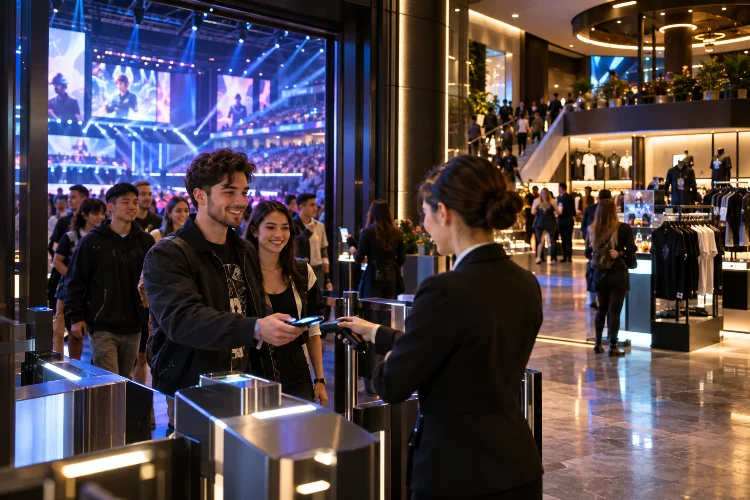
A sold-out esports arena looks like an obvious financial success. Thousands of fans have purchased tickets, premium seats are full, merchandise booths are busy, and sponsors have physical access to an enthusiastic audience.
But ticketing is only one piece of a much larger economic puzzle.
Understanding how ticketing revenue fits into major eSports event economics requires looking at what happens around each ticket.
A person entering an arena may also purchase merchandise, accommodation, food, premium experiences, or travel packages. Their presence makes sponsor activations more valuable and creates the crowd atmosphere that improves the global broadcast.
Ticket revenue also has limits. Riot Games has previously noted that live-event income from tickets, concessions, and merchandise is not as central to esports economics as it is in traditional sports because most esports audiences still watch online.
So the real question is not simply how much money an organizer makes from admission.
It is how each live attendee contributes to the broader commercial value of the event.
1. Ticket Sales Create Direct Consumer Revenue
The simplest economic function of ticketing is obvious: fans pay for access.
If an organizer sells 15,000 tickets at an average realized price of $70, gross ticket revenue would be roughly $1.05 million before fees, taxes, venue arrangements, discounts, and other deductions.
However, gross ticket income is not the same as event profit.
Large tournaments can require expensive venues, staging, security, production crews, internet infrastructure, screens, lighting, travel, hospitality, and staff.
This is why ticketing should be evaluated against the total event cost structure rather than celebrated simply because the arena is full.
Deloitte includes live-event ticket sales and merchandising among the established revenue streams in esports, alongside advertising, sponsorship, media rights, and publisher fees.
A healthy event therefore combines ticket revenue with several other commercial layers.
2. Scale Matters, but So Does Average Revenue Per Fan
A tournament can improve ticketing economics in two basic ways.
It can sell more tickets or create greater value from each attendee.
BLAST reported selling more than 190,000 tickets across 15 arena shows in 10 countries during 2025, and it expects annual ticket volume to grow further as its international event calendar expands.
Those numbers demonstrate the scale available to a global organizer.
However, capacity alone does not determine commercial performance.
Two 10,000-person events can have very different economics if one sells only standard admission while the other successfully offers multiple pricing tiers, premium seating, merchandise bundles, hotel packages, and hospitality.
That is why organizers increasingly think about revenue per attendee, not merely attendance.
A smaller premium audience can sometimes generate substantial commercial value even without filling a gigantic stadium.
3. Tiered Pricing Expands the Ticketing Opportunity
Not every fan values an esports event equally.
Some simply want the cheapest seat available.
Others are willing to spend significantly more for better viewing positions, exclusive merchandise, lounge access, early entry, meet-and-greets, or premium hospitality.
Tiered pricing allows organizers to capture these differences.
A basic structure might offer general admission, reserved seating, premium seating, and VIP packages.
The goal is not simply charging higher prices.
Each tier needs to provide a clear reason for the additional cost.
Premium packages can also reduce dependence on maximum venue capacity. Increasing average revenue per attendee may sometimes be more practical than finding an arena with another 5,000 seats.
The difficult part is maintaining accessibility.
If every attractive feature becomes expensive, organizers risk turning an event built around passionate gaming communities into something financially inaccessible to many core fans.
Good tickting strategy balances monetization with atmosphere.
4. Travel Packages Extend Revenue Beyond the Arena Seat
International esports fandom creates an unusual opportunity.
Fans often travel significant distances to attend major competitions.
BLAST says more than 70% of attendees at its events typically travel from outside the host city, with average daily fan spending exceeding $200.
That makes travel itself part of the event economy.
BLAST now offers official fan travel experiences that combine event tickets with hotel accommodation and official merchandise.
Bundling these products can increase customer value while simplifying the experience for traveling fans.
Instead of purchasing an arena ticket, searching separately for accommodation, and organizing merchandise afterward, a supporter can purchase a more complete event package.
For organizers, these packages create another monetization layer around the original ticket.
The ticket becomes the starting point of a travel product rather than the final product.
5. Ticket Buyers Increase Sponsorship Value
A physical audience has commercial value beyond what it paid for admission.
Sponsors can interact with live attendees in ways that are impossible through a standard livestream.
Brands can operate product demonstrations, competitions, photo opportunities, sampling stations, lounges, interactive installations, or merchandise giveaways inside the venue.
That engagement can make arena sponsorship inventory more valuable.
Recent BLAST partnerships demonstrate how sponsors can receive both broadcast exposure and physical-event integration.
Its 2026 IC partnership, for example, includes arena visibility, bespoke content, fan competitions, online experiences, and on-site activations.
The connection is important.
A ticket sale brings a fan into the building.
Once that fan is physically present, the organizer can offer sponsors more meaningful opportunities to interact with them.
Ticketing therefore indirectly supports sponsorship revenue.
6. Packed Arenas Improve the Broadcast Product
Live audiences also create something that is difficult to place directly on a balance sheet: atmosphere.
Crowd reactions make tournament broadcasts feel important.
Cheers after a clutch, chants before a final, and emotional reactions from fans turn an online stream into a live sporting spectacle.
That can strengthen the media product.
A visibly empty arena creates the opposite effect, even when online viewership is strong.
This means organizers sometimes have strategic reasons to prioritize attendance volume and accessible pricing rather than maximizing the price of every individual seat.
A strong crowd improves broadcast content, social clips, sponsor visibility, player experience, and the perceived prestige of the competition.
Ticket strategy therefore affects media value.
The people inside the building are effectively part of the production.
7. Host Cities Can Add Another Economic Layer
The economics become even more interesting when a host city enters the equation.
A traveling fan does not spend money only inside the arena.
They may purchase hotel rooms, restaurant meals, transportation, entertainment, and tourism experiences.
This gives cities and tourism boards a financial reason to help attract major esports tournaments.
BLAST says its 2025 events generated strong destination value, while an economic-impact study of the BLAST.tv Austin Major estimated more than $102 million in total economic impact.
BLAST also reported that fans attended the event from all 50 U.S. states and 37 countries.
These figures come from BLAST and its cited economic-impact analysis, so they should be understood in that context rather than treated as universal results for every esports event.
Still, the broader principle is clear.
A tournament can generate economic value far beyond its own ticket revenue.
That helps explain why destination partnerships are becoming an important part of large-event economics.
8. Ticketing Cannot Replace the Digital Audience
Despite the advantages of live attendance, physical ticketing has a hard ceiling.
An arena might hold 10,000 or 20,000 people.
Online broadcasts can potentially reach millions.
That structural difference explains why ticket revenue usually cannot become the only financial foundation for global esports.
Riot has explicitly discussed this contrast, noting that esports fandom is highly global and that almost all of its viewers historically watch online rather than through live-event attendance.
That has pushed the company to experiment with virtual event products that can monetize remote audiences.
This creates a hybrid economic model.
Physical tickets monetize scarcity and experience.
Digital products monetize scale.
An esports business can potentially use both.
A championship may sell every arena seat while simultaneously offering digital event passes, cosmetics, viewer rewards, or branded online experiences to fans who never travel to the venue.
That combination is much more scalabe than ticketing alone.
9. Sold-Out Events Create Strategic Proof of Demand
Ticket sales also provide valuable market information.
A sold-out tournament demonstrates that fans are willing to move from passive online viewing to paid physical attendance.
That evidence can influence future decisions about cities, venue sizes, sponsors, pricing, and event frequency.
BLAST described its 2024 Singapore World Final as sold out and later returned to Singapore as part of a multi-year relationship with the Singapore Tourism Board.
Strong attendance can therefore support future negotiations.
A tournament organizer approaching a new city with documented ticket sales, traveler percentages, and fan-spending data has a stronger commercial argument than one relying only on online impressions.
Ticketing becomes a measurement tool as well as a revenue source.
It proves that digital fandom can convert into physical demand.
10. The Best Model Measures Total Fan Value
The most useful way to evaluate ticketing is not:
Ticket price × attendance = success.
Instead, organizers should examine total commercial value created by each attendee.
That can include the original ticket, premium upgrades, merchandise, accommodation packages, food and beverage, sponsor engagement, repeat attendance, and the value the crowd adds to the broadcast.
There is also lifetime value.
A fan who attends one memorable tournament may buy tickets again in another city, purchase team merchandise, follow sponsors, watch future events, or convince friends to attend.
This makes event experience extremely important.
Aggressive monetization can increase revenue today while damaging repeat attendance tomorrow.
Sustainable live-event economics require a balance between extracting value and creating enough value that fans genuinely want to return.
Ticketing revenue matters in major esports events, but its economic role extends far beyond selling seats.
Live attendees generate direct admission revenue while also supporting premium packages, hospitality, merchandise, travel products, sponsor activations, destination spending, and the atmosphere that makes global broadcasts more compelling.
At the same time, physical capacity limits how far ticket revenue can scale.
Online audiences remain dramatically larger, which means sustainable esports economics usually combine live-event monetization with sponsorship, media rights, publisher support, and digital commerce.
When evaluating an event, do not ask only whether it sold out.
Look at average fan value, travel behavior, repeat attendance, venue costs, sponsor opportunities, and the wider economic impact around the event.
That broader picture reveals whether ticketing is simply producing revenue – or helping build a genuinely profitable event ecosystem.

