
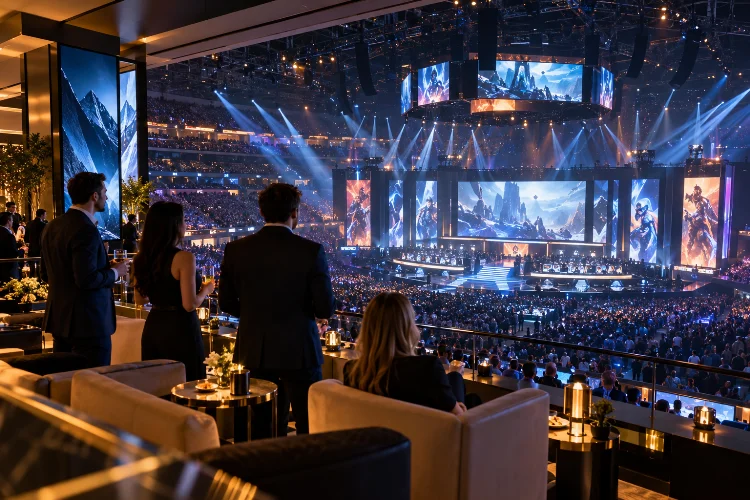
A sold-out arena and millions of livestream viewers can make a major eSports tournament look commercially successful. But a huge audience does not automatically create a sustainable business.
Producing international competitions is expensive. Organizers may need venues, broadcast crews, technology, stage production, travel, security, marketing, prize pools, hospitality, and dozens of specialized staff.
At the same time, fans have become accustomed to watching many major tournaments online for free.
That is why understanding how major eSports events build sustainable commercial value requires looking beyond ticket sales or one large sponsor.
Leading ecosystems increasingly combine sponsorship, media rights, digital items, advertising, ticketing, publisher partnerships, destination deals, and revenue-sharing models.
Riot Games, for example, has shifted more emphasis toward scalable digital esports content while continuing to generate sponsorship and media revenue.
The strongest events ultimately become platforms connecting fans, teams, publishers, brands, broadcasters, and host cities rather than simply tournaments that disappear after the final match.
1. Build an Audience Before Trying to Monetize Everything
Commercial value begins with attention.
Sponsors, broadcasters, teams, publishers, and host cities are more interested in events that attract loyal audiences rather than viewers who appear once and disappear immediately afterward.
This is why major tournament operators invest heavily in storytelling.
Player rivalries, team histories, documentaries, interviews, social clips, pre-match analysis, creator collaborations, and behind-the-scenes content keep audiences connected between competition days.
Audience accessibility also matters.
Putting every important match behind an expensive paywall might generate short-term subscription income, but it could reduce reach. The challenge is finding a balance between broad distribution and monetization.
ESL FACEIT Group’s 2026 partnership with KICK illustrates this strategy. The company described the deal as part of a broader distribution approach aimed at reaching additional audiences while keeping its esports content widely accessible.
Sustainable monetization becomes easier once fans actively care about the competition.
2. Turn Sponsorship Into a Partnership, Not Just Logo Placement
Sponsorship has historically been one of the largest revenue sources in esports.
Deloitte’s research found sponsorship to be a major contributor to core esports revenue, while leagues and event organizers were also working to diversify into adjacent activities and other commercial streams.
But modern sponsorship is becoming more sophisticated.
Brands are rarely satisfied with a logo sitting beside a tournament desk for eight hours.
They want activation.
A hardware company might sponsor player equipment and create performance-focused content. A consumer brand might operate an arena experience, sponsor a highlight segment, or collaborate with players and creators.
BLAST has continued investing in global brand partnerships as part of its commercial growth strategy, combining major live events, broadcast content, competitive formats, and sponsorship activation.
The best sponorship packages therefore connect brands naturally with the fan experience.
That creates more measurable value than selling empty advertising inventory.
3. Use Media Rights Without Sacrificing Audience Growth
Media rights are central to traditional sports economics, but esports operates differently.
Many esports fans grew up expecting free streams on digital platforms.
Major operators therefore need flexible rights strategies.
Instead of selling one global exclusive license, organizers can create regional, language-specific, television, or platform agreements.
ESL FACEIT Group currently offers media-rights licensing across parts of its tournament portfolio, including live television and other content.
BLAST has also used regional licensing. Its multi-year agreement covering Brazil and Latin America gave a partner local-language media rights for BLAST Premier and BLAST Slam beginning in 2026.
This creates commercial value while maintaining broader international distribution.
The real strategic asset is not merely the broadcast.
It is the right to distribute valuable esports content to specific audiences, languages, markets, and platforms.
4. Digital Goods Create a Scalable Fan Revenue Stream
Digital goods may represent one of esports’ strongest advantages over traditional sports.
A football tournament cannot instantly place a team-branded digital weapon inside the sport itself.
An esports publisher can.
Skins, emotes, bundles, event passes, icons, and other virtual goods allow fans to express support inside the game they already play.
Riot Games has specifically identified in-game digital sales as one of the most scalable opportunities for esports revenue.
Its League of Legends model increasingly shares digital-content income with teams through a Global Revenue Pool rather than relying primarily on sponsorship revenue sharing.
The potential is significant.
Riot reported that its 2022 VALORANT Champions skin bundle generated $42 million, with half of that revenue distributed to participating teams.
Digital merchandise works especially well because production is not limited by physical inventory.
One successful item can be sold globally to millions of fans.
For publisher-controlled esports, this creates a powerful connection between fandom and direct commercial participation.
5. Turn Live Events Into Premium Experiences
Online audiences create global scale, but physical events offer different commercial opportunities.
Tickets are only the beginning.
Fans attending a major arena tournament can also purchase premium seating, hospitality, merchandise, food, meet-and-greet packages, or sponsor experiences.
The event itself becomes a destination.
That can also create value for host cities.
International tournaments bring players, staff, media, and spectators who spend on hotels, transportation, restaurants, and local entertainment.
For organizers, the commercial opportunity is therefore larger than selling 10,000 seats.
A carefully designed arena event can support ticketing revenue, brand activations, local partnerships, merchandise, broadcast storytelling, and future event promotion simultaneously.
The key is making attendance feel meaningfully different from simply watching the free stream at home.
Fans should be buying an experience, not just a chair.
6. Connect Broadcasts Directly With Commerce
The traditional broadcast model separates watching from buying.
Digital esports can connect them.
Riot has already experimented with Event Passes, viewer rewards, Drops, and digital items connected to its esports broadcasts. The company has also discussed developing its viewing platform further as a commerce environment for digital goods and services.
This creates interesting possibilities.
Imagine watching a player use a particular cosmetic during a championship match and immediately receiving an opportunity to purchase related content.
Or imagine watching your favorite team and receiving access to a team-specific digital package where part of the revenue supports that organization.
This shortens the distance between emotional engagement and transaction.
Rather than hoping viewers remember a merchandise shop several hours later, commerce becomes part of the viewing ecosystem itself.
That can make fan monetization more efficent while also giving supporters clearer ways to contribute financially.
7. Revenue Sharing Creates Healthier Competitive Ecosystems
An event can generate strong revenue and still fail strategically if teams cannot afford to participate long term.
Sustainable competition needs strong organizations.
That is why revenue sharing is becoming an important part of esports economics.
Riot’s updated League of Legends model distributes its Global Revenue Pool through three categories: general shares, competitive shares, and fandom shares. The structure is designed to give teams a baseline while also rewarding competitive success and fan development.
This alignment matters.
Tournament organizers need recognizable teams and star players because they drive viewership.
Teams need viable competitions because those events create exposure, sponsorship opportunities, and fan growth.
Publishers need both sides because successful esports can strengthen long-term engagement with the underlying game.
Revenue sharing turns these relationships from purely transactional agreements into a more interconnected ecosystem.
8. Build Commercial Value Between Tournaments
A major mistake is thinking that commercial value exists only while matches are live.
A tournament might occupy one weekend, but its media cycle can last for months.
Before the event, organizers have qualification stories, roster changes, predictions, interviews, venue announcements, and promotional campaigns.
During the event, there are live matches, highlights, statistics, social conversations, and sponsor integrations.
Afterward, there are documentaries, replays, analysis, interviews, short-form clips, and stories leading into the next tournament.
This turns one event into a much larger content library.
That library can support advertising, sponsorship, platform engagement, licensing, and audience retention long after the trophy is awarded.
This is where esports operators increasingly resemble media companies.
The matches produce the core intellectual property, but commercial value continues through everything built around them.
9. Measure Fan Quality Instead of Chasing One Big Viewer Number
Peak concurrent viewers look impressive in a presentation.
They do not tell the entire commercial story.
An event needs to understand who its fans are, how long they watch, what markets they come from, which teams they support, how they interact with sponsors, and whether they purchase related products.
A smaller deeply engaged audience may sometimes be more commercially useful than a much larger group of casual viewers.
Brands care about measurable outcomes.
Publishers may care about player activity and retention.
Teams care about fandom growth.
Host cities may care about physical attendance and tourism.
Commercial strategy therefore improves when organizers match metrics to stakeholder goals rather than treating total viewership as the only definition of success.
Better measurement can also make future sponsorship and rights negotiations more predictble because organizers have evidence of what their audience actually delivers.
10. Diversify Revenue Without Damaging the Fan Experience
The most sustainable major events rarely depend on one revenue source.
Sponsorship may weaken during an economic downturn.
Media-rights demand can change.
Ticket sales depend on location.
Digital-item revenue varies by game and publisher.
Diversification provides resilience.
Deloitte has highlighted how esports companies increasingly combine core competition revenue with adjacent activities such as content creation, media production, influencer marketing, and other services.
However, adding monetization everywhere can backfire.
Too many advertisements can damage broadcasts. Aggressive ticket pricing can weaken arena attendance. Excessive exclusivity can reduce audience reach.
The strongest commercial model creates value without making fans feel constantly monetized.
Every revenue stream should strengthen the ecosystem rather than simply extracting more money from the same audience.
Major eSports events create sustainable commercial value when they become more than isolated competitions.
The strongest models combine large audiences with sponsorship activation, flexible media rights, digital goods, live-event experiences, broadcast commerce, content libraries, and revenue sharing.
Just as importantly, they distribute enough value across teams, publishers, organizers, and partners to keep the competitive ecosystem healthy.
If you are planning or evaluating an esports event, start by mapping the full fan journey before calculating revenue.
Ask what keeps people engaged before, during, and after the competition – and which stakeholders benefit from that engagement.
Sustainable commerical value usually appears when those relationships reinforce one another. A great tournament attracts attention, but a great esports business turns that attention into a community and ecosystem that people want to return to year after year.

